City / Combat / Police
Wrecking City
The city breaks
the way you hit it.
Punch a wall and it chips and cracks. Keep at it and chunks break off, cracks spread from every hole, and when most of a storey is gone the building creaks and comes down into its own footprint in a cloud of dust. Five minutes later it stands back up.
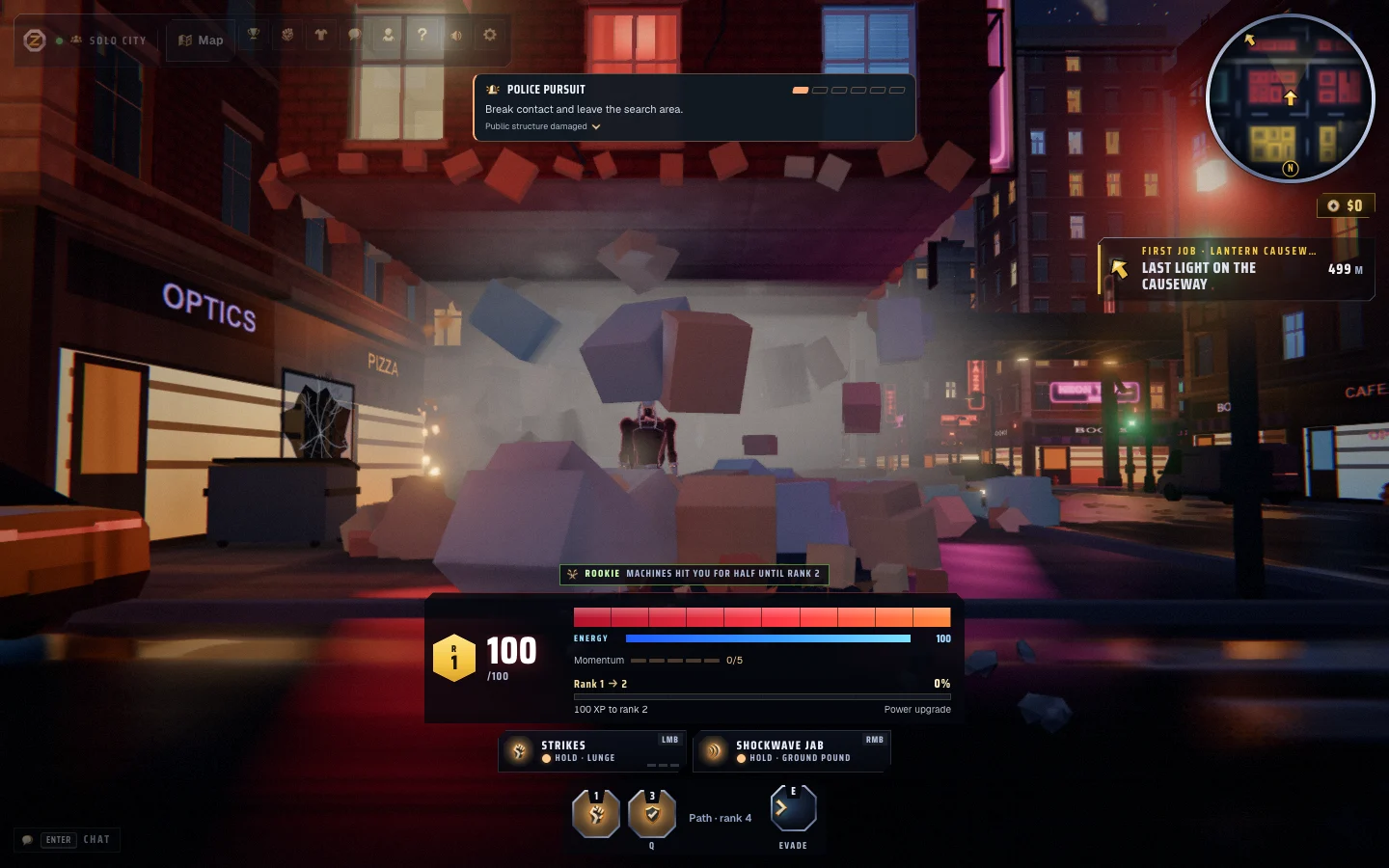
01 / Punch it down
A dozen jabs, one building.
A strike that finds nobody in its arc now lands on the wall it meets. The shop glass cracks, chunks of brick break away and the hole widens with every blow. Take out most of the ground floor and the building creaks, shudders and folds down into its own footprint around you, storey after storey.
Fifteen seconds of continuous solo gameplay: a villain Brawler jabs the storefront of a four-storey café in the Narrows, opens the ground floor, steps inside and keeps striking until the building collapses into dust and rubble. Every strike is an ordinary left click. Captured in a desktop browser at the released source with the complete interface visible. Turn on the player's sound to hear the game.
02 / Cracks spread
Every hole weakens the next.
Walls crack before they break: jagged strokes start at an edge and wander inward, branch, then spall plaster. Each broken section weakens its neighbours, so cracks spread from every hole. The building keeps its own windows, shops and floors while it falls apart, with bare concrete, floor slabs and rebar inside the holes, and broken sections tumble into the street.
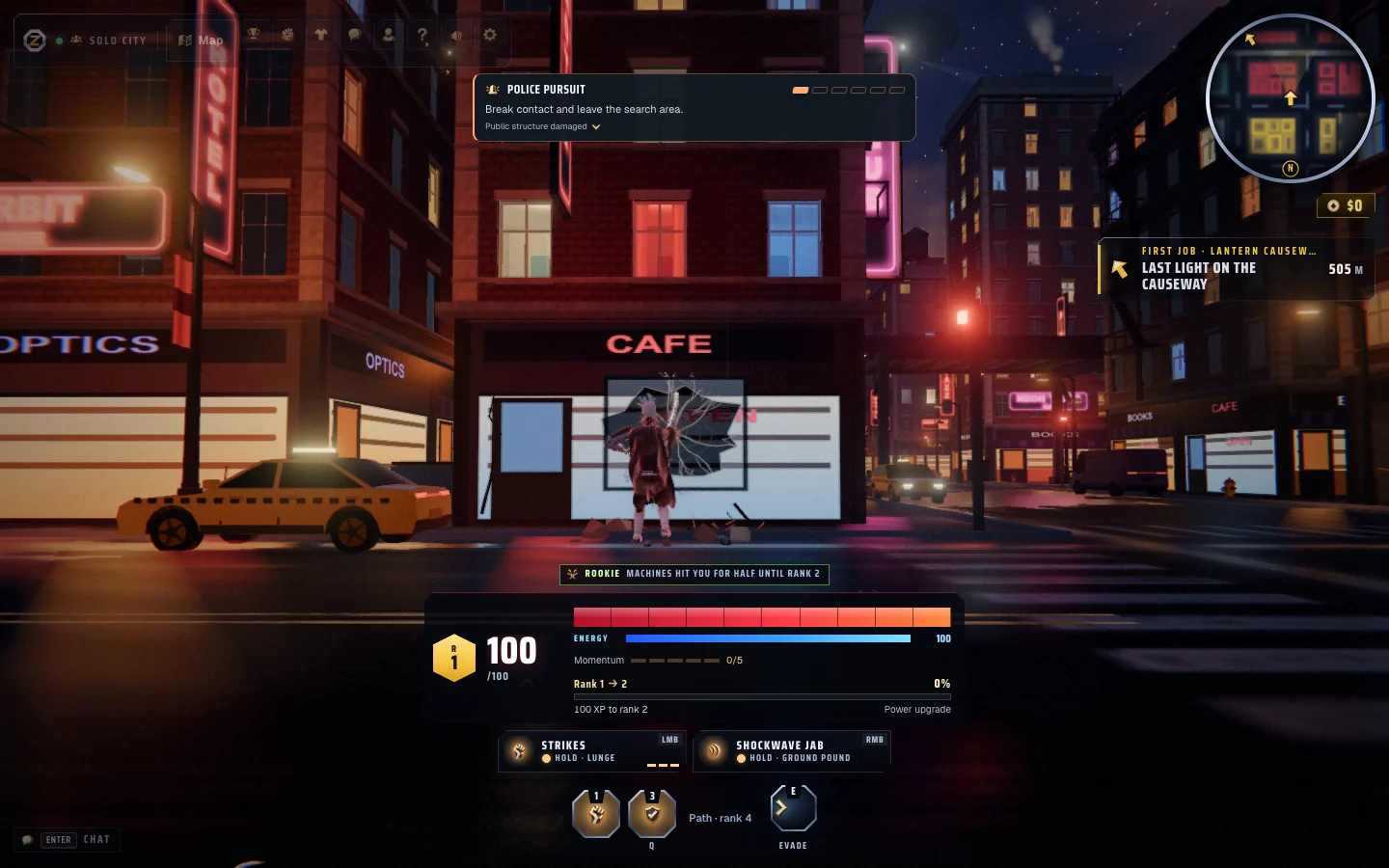
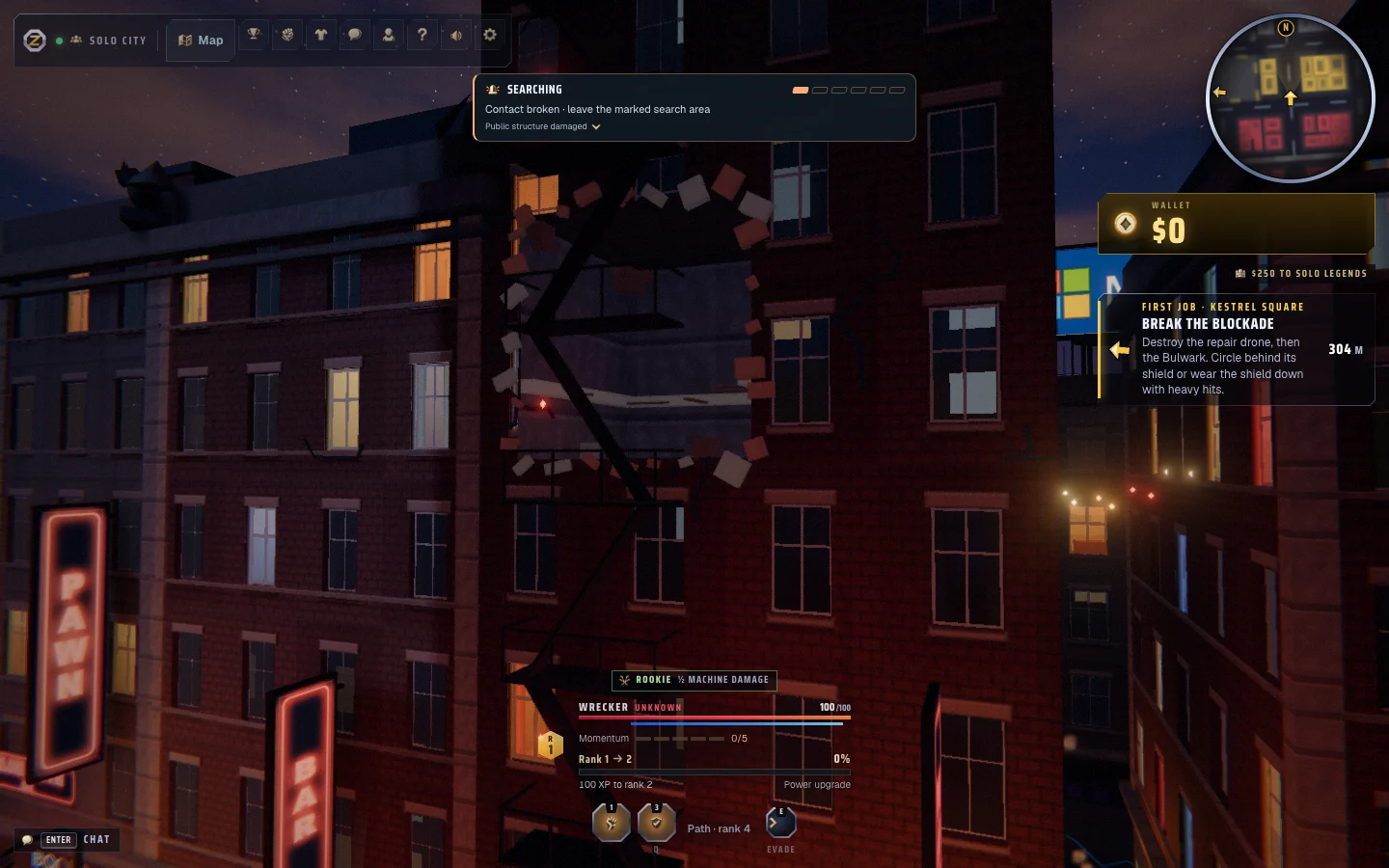
03 / Down it comes
A storey fails. Everything above it follows.
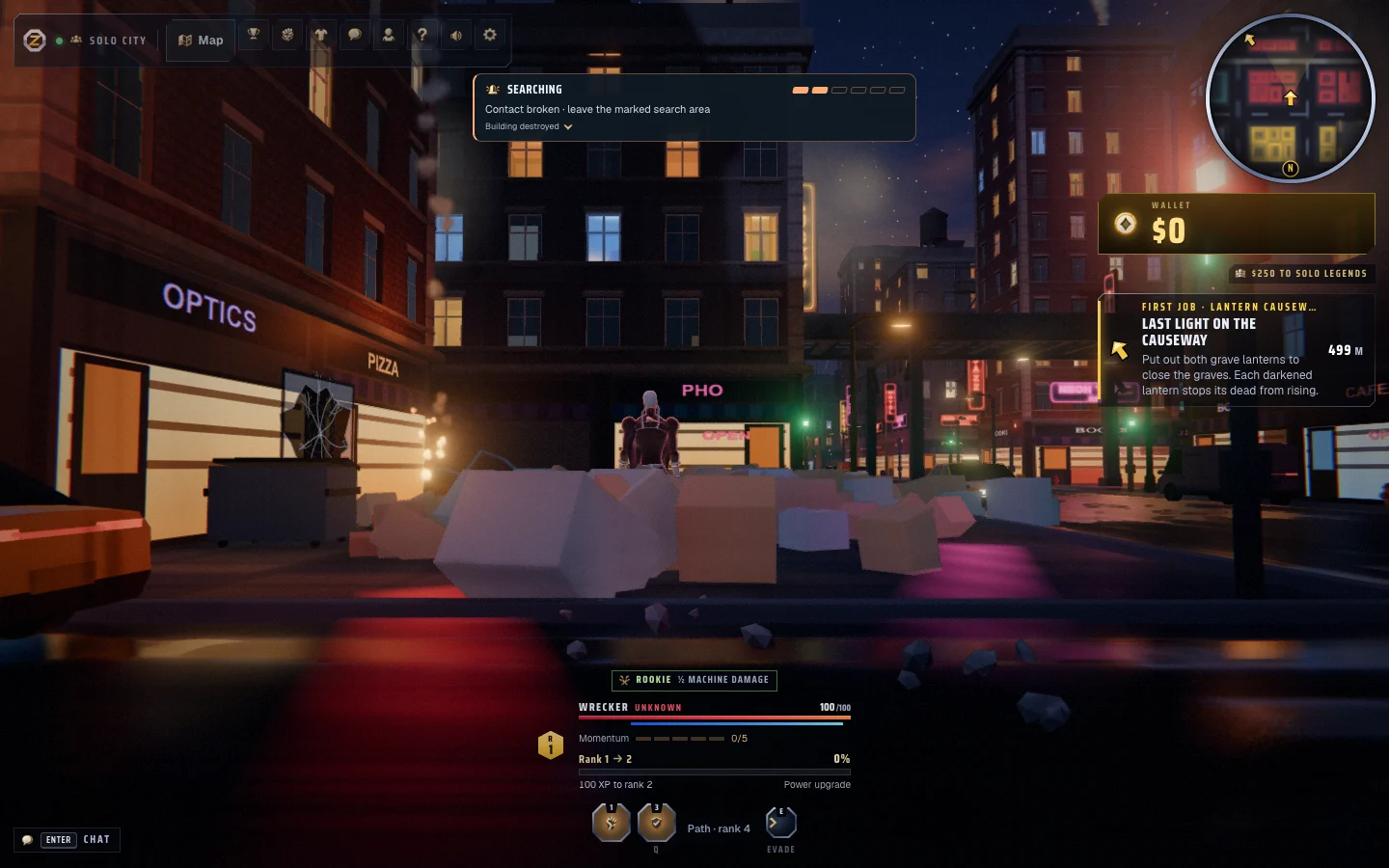
When a storey keeps less than 40% of itself with floors still above it, the building creaks for about two seconds, then that storey and everything above it come down into the footprint while a dense plume of dust climbs the falling mass. Take out the ground floor and the whole building goes; a failed upper storey leaves a stump with a bare slab on top. The rubble stays where it fell.
Sixteen seconds of continuous solo gameplay of a tall Narrows tower from a free camera across the street. Development impacts owned by the player crack its upper storeys, then break its ground floor; the tower creaks and sinks into its own footprint in a plume of dust. Captured in a desktop browser at the released source with the complete interface visible. Turn on the player's sound to hear the game.
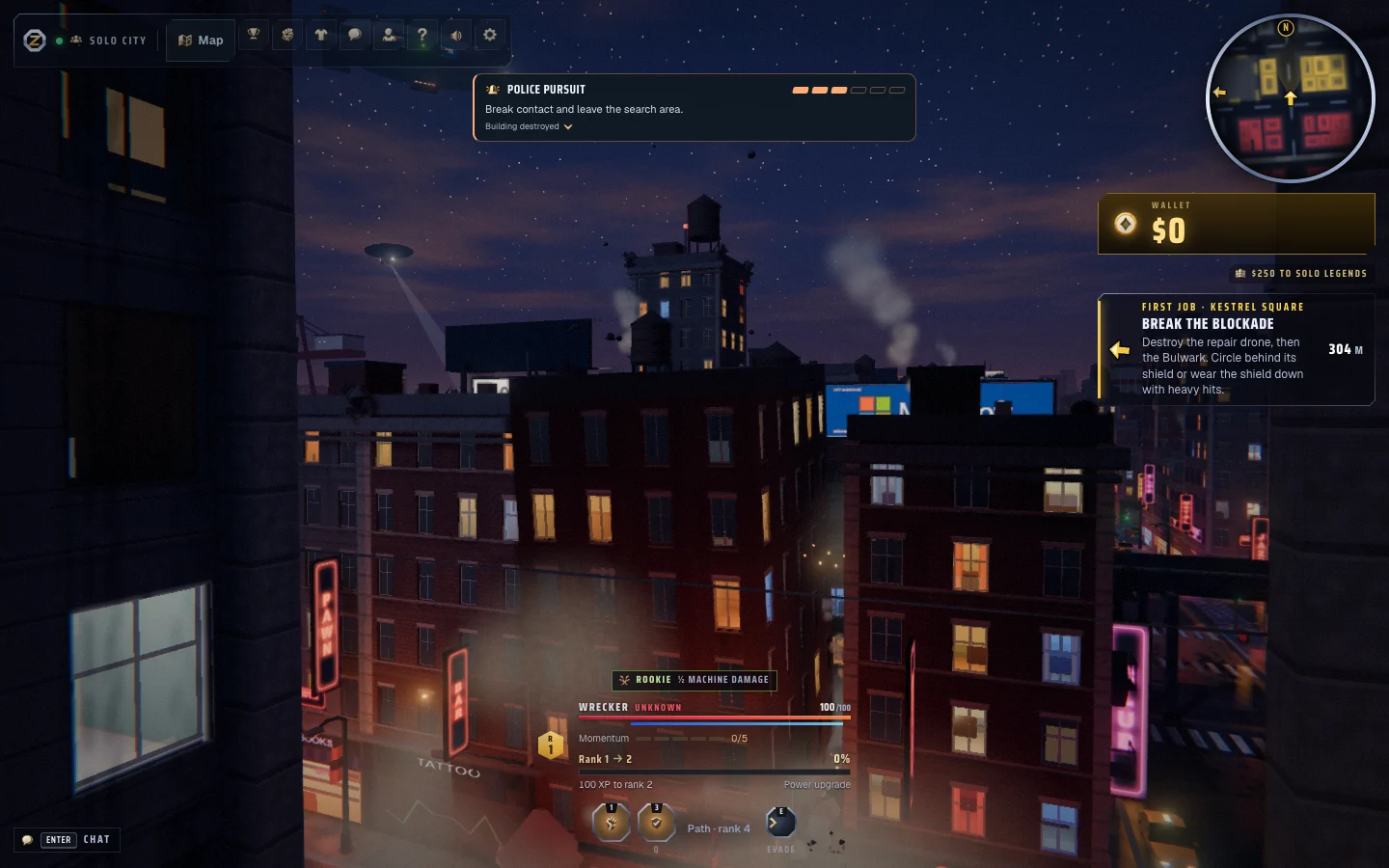
04 / Answer for it
Villains pay. The city rebuilds.
For a villain, damaging a public building is a crime like hurting a citizen: “Public structure damaged” draws police heat, and bringing one down is the heavier “Building destroyed”. Heroes can wreck the city without the police coming for them. Five minutes after the last blow, anyone inside is moved out and the building rises out of its footprint, whole again. Damage comes from the room, so every player sees the same building and late arrivals see it as it stands; landmarks and mission structures keep their own geometry.
Eleven seconds of continuous solo gameplay from the same free camera, recorded as the fallen tower's five-minute repair came due: the gap in the skyline fills as the tower rises back out of its footprint. Captured in a desktop browser at the released source with the complete interface visible.
The details
Everything in v0.65.
Punch a wall and it answers
A strike that finds nobody in its arc now lands on the wall it meets. Walls chip and crack: jagged strokes start at an edge and wander inward, branch, then spall plaster. About three jabs knock a section out; heavy strikes, powers, gadgets, Ultra weapons and bosses hit harder through their existing impacts.
Cracks spread from every hole
Each broken section weakens its neighbours, so cracks spread from every hole. A damaged building keeps its own windows, shops and floors while it falls apart, with bare concrete, floor slabs and rebar inside the holes, and broken sections tumble into the street. Signs, fire escapes and roof furniture hold on until the building loses its top storey or about a third of itself.
Knock out a storey and it comes down
When a storey keeps less than 40% of itself with floors still standing above it, the building creaks and shudders for about two seconds, then that storey and everything above it fold into the footprint while a dense plume of dust climbs the falling mass. A stump with a bare floor slab, or a heap of rubble, stays behind. Take out the ground floor and the whole building goes.
Villains answer for it
For a villain, damaging a public building is a crime like hurting a citizen: “Public structure damaged” draws police heat, and bringing one down is the heavier “Building destroyed”. Heroes can wreck the city without the police coming for them.
Back up in five minutes
Five minutes after the last blow, anyone inside is moved out and the building rises out of its footprint, whole again, with its signs and fire escapes back in place.
The same building for everyone
Damage comes from the room, so every player sees the same building, late arrivals see it as it stands and collision changes with the picture. Debris is bounded at every quality setting, reduced motion drops the shake, lean and most dust, and landmarks and mission structures keep their own geometry. The game and its server moved to protocol 32 together; in a desktop browser test with fourteen damaged buildings in view the game held 60 fps, and phones have not been measured yet.
0.65.1 · Destruction and lighting costs
Effects upload only their active instances, night lights skip unused slots, and damaged buildings reuse unchanged rubble geometry and support calculations.